
Blog
Retaining Walls in Austin — What They Are, When You Need One, and How They're Built
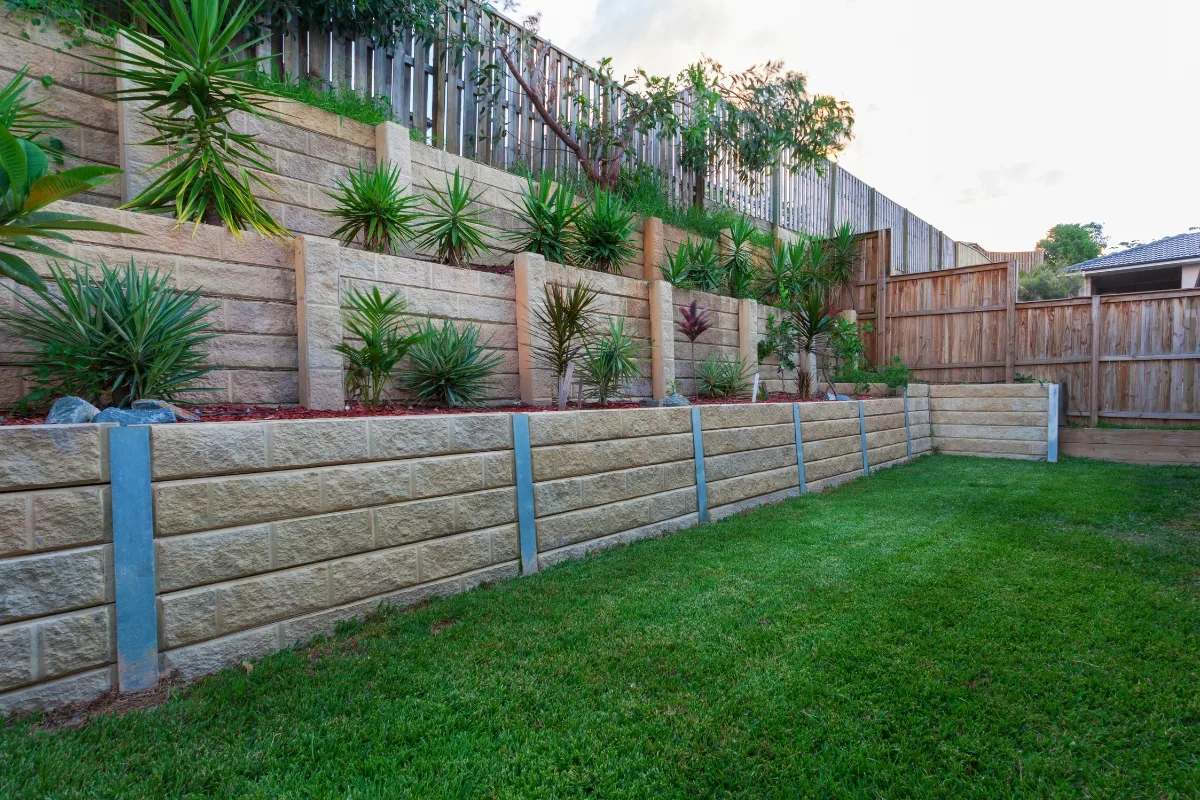
If your Austin yard has a slope, you've probably already noticed the problems that come with it. Mulch washes into the lawn after heavy rain. Plants struggle to establish on the hillside. The ground erodes a little more every season. And the space, however large it might be, just isn't usable because there's no flat area to actually spend time in. Retaining walls are built specifically to solve these problems — and when they're designed and installed correctly, they do it for decades.
At Twelve Point Landscaping, we design and build retaining walls for homeowners throughout Austin, Dripping Springs, Bee Cave, Lakeway, and Central Texas. Here's everything you need to know about retaining walls — what they do, when you need one, and what makes a great one last.
What Is a Retaining Wall?
A retaining wall is a structure built to hold back soil on a slope, preventing it from sliding or eroding downhill. By containing the soil behind it, a retaining wall creates a level area in front of it — turning a sloped, unusable hillside into a functional, stable outdoor space.
Retaining walls serve both structural and aesthetic purposes. On the structural side, they prevent erosion, manage drainage, and stabilize slopes that would otherwise continue to degrade over time. On the aesthetic side, they add clean, defined lines to a landscape, create opportunities for tiered planting areas, and can become significant visual features in their own right when built with attractive materials.
When Does a Yard Need a Retaining Wall?
Not every sloped yard needs a retaining wall, but there are clear signs that one is either necessary or would significantly improve your property:
Visible Erosion — If you're losing topsoil, mulch, or ground cover after rain events, your slope is eroding. Left unaddressed, erosion gets progressively worse and can eventually affect your property's foundation or drainage infrastructure.
Unusable Sloped Areas — A steep slope that can't be safely walked on or used for any outdoor living purpose is a missed opportunity. A retaining wall creates level terraces that can be used for planting, outdoor living, or simply navigating the yard safely.
Drainage Problems — Slopes channel water quickly, and without proper management, that water ends up in places you don't want it — pooling at the base of the slope, running toward your home's foundation, or flooding lower areas of the yard. Retaining walls with proper drainage systems redirect water appropriately.
Existing Wall Failure — If you have an old retaining wall that's leaning, cracking, or bowing, it's a sign the original installation didn't account for drainage properly or was built with inadequate materials. A failing retaining wall needs to be addressed before it fails completely.
Slope Near Structures — Any slope near your home's foundation, a driveway, or other structures should be evaluated for retaining wall needs. Soil movement near structures is a serious issue that retaining walls can prevent.
Retaining Wall Materials: What Are Your Options?
The material you choose for a retaining wall affects its appearance, its cost, and its performance over time. Here are the most common options for Austin retaining walls:
Concrete Block — The most common retaining wall material for residential projects. Concrete segmental retaining wall blocks are engineered specifically for this purpose — they're strong, durable, and designed to interlock in a way that provides structural stability. Available in a range of colors and textures. Cost-effective and reliable for most residential applications.
Natural Stone — Limestone, sandstone, and other natural stones create beautiful, organic-looking retaining walls that blend naturally with Central Texas landscapes. Natural stone walls require more skill to build correctly but deliver a character and authenticity that manufactured materials can't replicate. Higher cost but strong long-term appeal.
Boulder Walls — Large natural boulders used to create retaining walls. We'll cover these in more detail in a separate service section, but boulder walls are worth mentioning here because they're an excellent option for slopes that need significant soil retention and a bold, natural aesthetic.
Timber — Wood retaining walls are less common in new construction due to longevity concerns — even pressure-treated timber has a limited lifespan in Austin's climate. Typically not recommended for new retaining wall construction where long-term performance is the goal.
What Makes a Retaining Wall Last
The most common reason retaining walls fail prematurely isn't material choice — it's inadequate drainage. Soil holds water, and water creates pressure. A retaining wall that doesn't have a proper drainage system built into it will eventually have to deal with hydrostatic pressure that pushes the wall outward. Over time, that pressure causes walls to lean, bow, crack, or fail.
A properly built retaining wall includes:
Proper Batter — Most retaining walls are built with a slight backward lean (batter) into the slope. This counters the outward pressure of the soil behind the wall.
Drainage Aggregate — A layer of crushed stone or gravel is placed directly behind the wall to allow water to drain freely rather than building up against the wall face.
Drainage Pipe — A perforated pipe at the base of the wall collects water from the drainage aggregate and directs it away from the wall.
Weep Holes — Openings in the wall face that allow water to escape if it builds up behind the wall. Essential for walls where drainage aggregate and pipe alone may not be sufficient.
Proper Foundation — The base course of a retaining wall needs to be set below grade on a level, compacted foundation. An improperly set base course is a recipe for wall failure.
Get all of these right, and a retaining wall will hold up for decades. Skip any of them, and you're likely dealing with a failing wall within a few years.
Retaining Walls as Landscape Features
Beyond their functional role, retaining walls are also an opportunity to add significant visual interest to an Austin yard. A well-designed retaining wall system — particularly one using natural stone or quality block materials — can become one of the most attractive features of a property.
Tiered retaining walls create beautiful opportunities for layered planting beds that add depth and color to a sloped yard. A single retaining wall with a flat planting area behind it becomes a stage for plants, shrubs, and trees. Walls with integrated steps allow you to navigate a sloped yard gracefully rather than struggling up a hillside.
When retaining walls are designed as part of an overall landscape plan rather than as isolated utility structures, the results are consistently more attractive and more functional.

If you have a slope that's causing problems — or simply a sloped space you'd like to make more usable — we'd love to take a look.



find us on


