
Blog
Hardscaping That Creates Controlled Outdoor Access Without Limiting Use
Why Outdoor Access Needs to Be Controlled
Outdoor access points—such as entries, side yards, gates, and transitions—experience heavy, repeated use. When access isn’t controlled, foot traffic spreads into lawns, planting beds, and soft soil, causing damage that worsens over time.
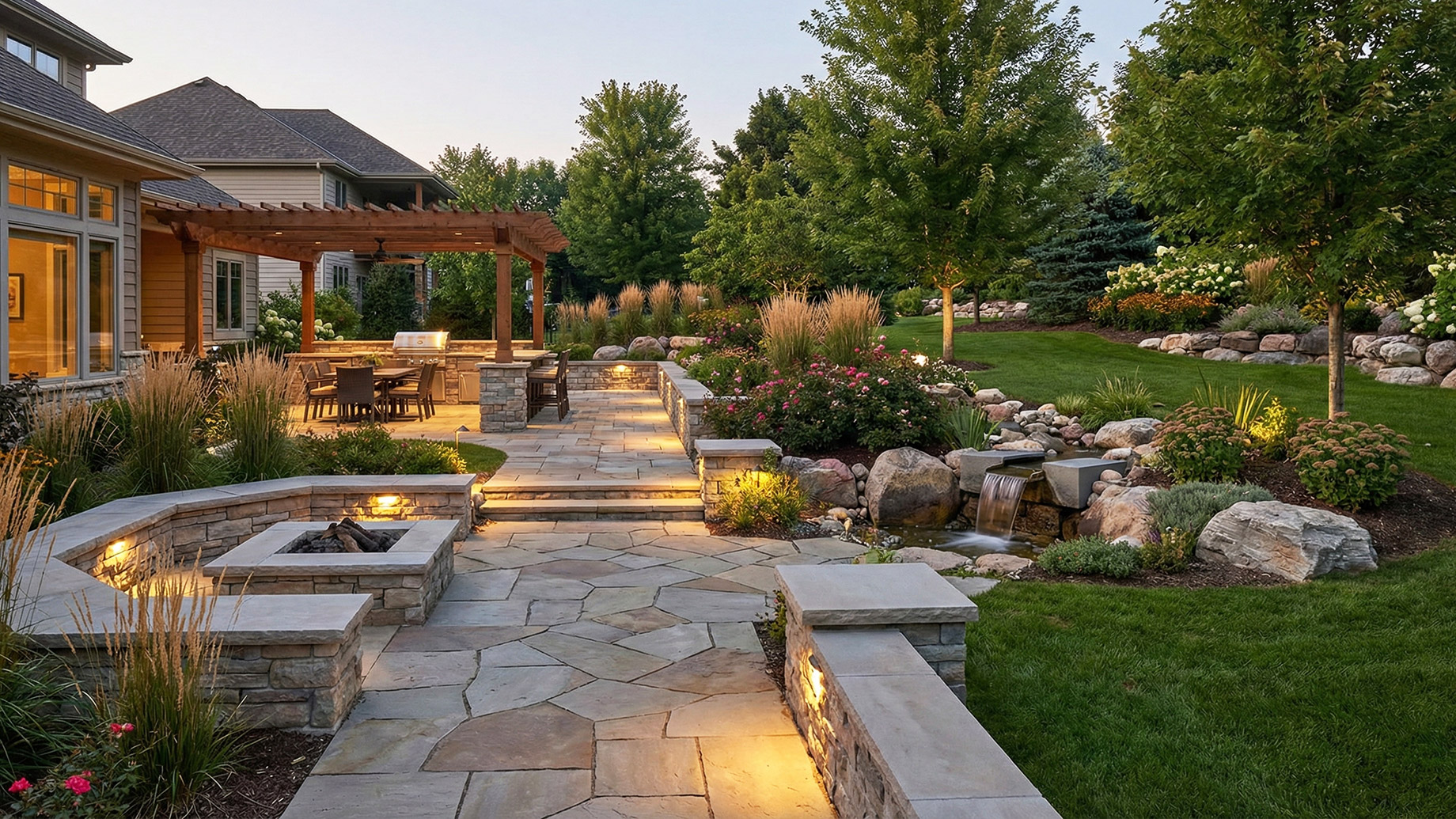
Hardscaping for controlled outdoor access establishes clear, durable routes that guide movement where the landscape is built to handle it—without restricting how the space is used.
Common Problems Caused by Uncontrolled Access
When people move freely without guidance, wear appears quickly.
Common issues include:
- Muddy entry points
- Worn grass along common routes
- Soil compaction near doors and gates
- Damage to nearby plantings
- Uneven walking surfaces
These problems usually point to missing or poorly defined access paths.
How Hardscaping Defines Where People Should Walk
Hardscaping introduces reinforced surfaces that naturally attract foot traffic. Instead of forcing people to avoid certain areas, it makes the intended route the easiest and most comfortable option.
Controlled access hardscaping:
- Creates obvious walking paths
- Keeps movement predictable
- Protects surrounding landscaping
Clear routes reduce unnecessary damage.
Protecting Lawns and Planting Beds
Lawns and plantings often suffer when access routes aren’t defined. Hardscaping redirects movement away from these vulnerable areas.
This protection helps:
- Preserve turf health
- Prevent erosion
- Maintain clean planting edges
Protected areas stay healthier longer.
Improving Safety at Key Access Points
Uncontrolled access can lead to uneven footing and slippery conditions. Hardscaping improves safety by creating level, stable surfaces where people enter and exit spaces.
Safety benefits include:
- Better traction
- Fewer trip hazards
- Clear transitions between surfaces
Safer access supports daily use.
Managing Drainage Along Access Routes
Access points often collect water due to roof runoff and foot traffic patterns. Hardscaping incorporates drainage planning to keep these areas usable.
Drainage-aware access design:
- Prevents pooling
- Reduces erosion
- Extends surface lifespan
Dry access routes perform better year-round.
Creating Access Without Blocking Flow
Controlled access doesn’t mean restricting movement. Hardscaping guides people smoothly through the space while maintaining comfort and flexibility.
Well-designed access routes:
- Feel intuitive
- Reduce congestion
- Improve usability
People naturally follow the best path.
Supporting High-Traffic Areas With Durable Surfaces
Doors, gates, and walkways see constant use. Hardscaping reinforces these zones so they don’t degrade over time.
Durable access areas:
- Handle repeated foot traffic
- Maintain consistent elevations
- Reduce long-term maintenance
Strong surfaces protect the entire yard.
Blending Access Control With Landscape Design
Access routes shouldn’t feel like afterthoughts. Professional hardscaping integrates them seamlessly into the overall landscape.
Integrated design:
- Matches surrounding materials
- Maintains visual flow
- Enhances curb appeal
Function and appearance work together.
Reducing Maintenance From Repeated Wear
Uncontrolled access leads to constant repairs. Hardscaping concentrates wear where it’s expected and manageable.
Maintenance benefits include:
- Fewer lawn repairs
- Less soil replacement
- Easier cleanup
Durability saves time and effort.
Planning Access for Changing Needs
Outdoor use evolves over time. Hardscaping for controlled access allows routes to adapt without major redesign.
Future-ready access planning:
- Supports new layouts
- Preserves landscaping
- Maintains usability
Flexibility adds long-term value.
Why Professional Hardscaping Makes the Difference
Controlled access requires understanding movement patterns, grading, and drainage. DIY solutions often fail to contain wear effectively.
Professional hardscaping provides:
- Strategic access planning
- Proper base preparation
- Long-term durability
Experience ensures access stays controlled.

Is Uncontrolled Access Damaging Your Yard?
If entry points and walking routes are wearing down your landscape, hardscaping may be the solution. With controlled access design, movement can be guided without sacrificing comfort or appearance.
Contact Twelve Point Landscaping today to schedule a free estimate and explore hardscaping solutions designed to create controlled outdoor access that protects your landscape and improves everyday usability.



find us on


